Tuesday, 17 July 2012

From touchline to shining touchline

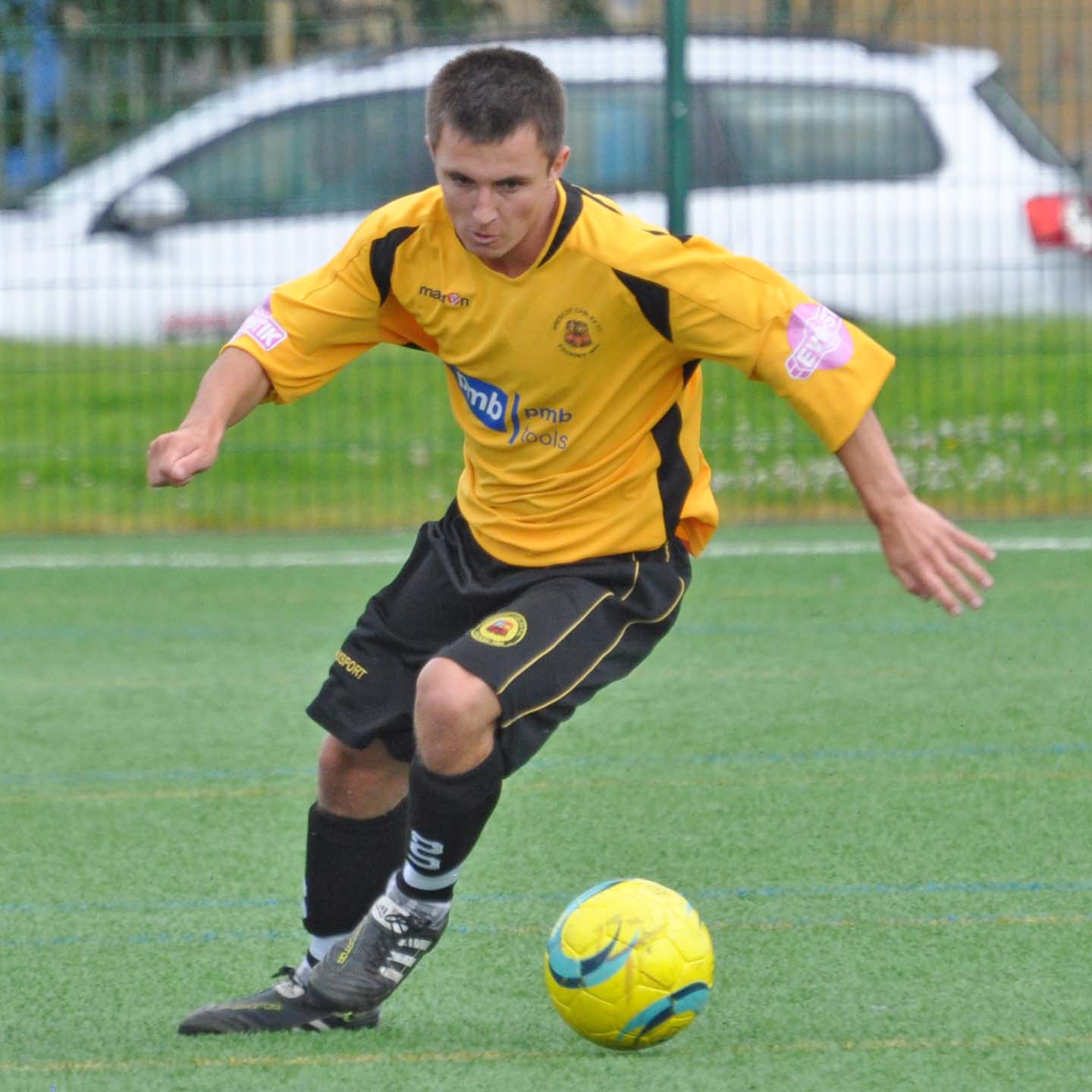
"I would not know where to buy suits that shiny", mused the Vicar, observing a particularly fashionably turned out congregation for a baptism. For me, a suit shinier than shoes is on the list of people your grandmother would warn you about, up there with more rings than fingers. These wonders are achieved by the judicious addition of modern synthetic fibres, so I should not have been surprised at the degree of shine imparted by a polyester pitch on a sunny day.
Rich Moran
As the shine is only from the level of the pitch, it is not as troublesome as other kinds of backlighting - as we can see above, the lighting has taken its cue from the more matt finish of the wall and natural grass bank behind. Given the weather we have had recently, I should have been surprised at a sunny day, although it was only sunny for part of it. Also, playing on an artificial pitch at least guaranteed that the game would go ahead.

This was Prescot Cables' first pre season game, against Stockport Sports, previously Woodley Sports. Our 4-0 defeat there on the opening day of last season suggested we may be in for a long campaign. Whilst they had a good season on the field, they were relegated due to ground grading and security of tenure issues. They seem keen to bounce back, adopting the Stockport Sports name to increase sponsorship opportunities, as few from outside Stockport are familiar with Woodley. This may be true: last year most of our independently travelling supporters went directly to Woodley and pronounced themselves unimpressed with the choice of pubs, whereas I realised it was a short bus ride from Stockport, and accessed the selection of Good Beer Guide establishments there. Their ambition extends on the field too, as they have attracted the European Cup winning player and former Thailand and Indonesia manager Peter Withe as their manager.

Building work was ongoing at their home at Stockport Sports Village, so the game was played at the JMO Sports Park, a small complex of pitches in Skelmersdale, and handy for the main bus route, which stopped a couple of hundred yards away, near a roundabout. This, on inspection if its sign, appeared to be called "The Roundabout", a strange choice of name in a town that has one every few hundred yards.

Stockport had already played a couple of pre season games (the North West Counties season starts a couple of weeks before ours, at about the time pre season games used to start), so they fielded the same team for both halves, whereas Cables' new manager Dave Powell took the opportunity to try two different combinations of players in a match situation, with only James Thomas playing in both halves.
Dave Powell
James Thomas
At this time of year, there is always speculation as to who will be back, as non contract players' registrations expire on 1st June, so players are free agents until they register for the new season. The first couple of pre season games are an opportunity to see who is pulling on a shirt, and of course word spreads around about who has appeared elsewhere. Even other managers take an interest, I spotted in the background of one of my pictures that Tommy Lawson, the manager of Skelmersdale United had stopped off for a few minutes to take a look.
Steven Longrigg gathers the ball with James McCulloch in defence
Steven Kelly
Returning players appearing in this game included Stephen Longrigg in goal, James McCulloch and Steven Kelly. Also present was Liam Hollett, who will not be playing for a month or so, as he is recovering from a knee operation - I am trying to remember a game since Liam started playing regularly for the first team when he has not been present, even when injured or suspended, he has been there, supporting the team.

The rest of the pictures from the game can be seen here.

Tuesday, 12 June 2012

Into the Permafrost

This blog likes to follow the progress of people with whom I have been watching sport, or who I have watched playing. So, I was pleased to hear the news from Banstead Athletic of the Cherry Red Records Combined Counties League that they had appointed Andrew Tucker as their new Manager.

I have known Andy as a Dulwich Hamlet supporter for many years. He has been pursuing a career in coaching, most recently at Croydon FC, and scouting for the Charlton Athletic Academy, and this is his first appointment in senior management. He has also found time to continue to turn out for the Dulwich Hamlet Supporters' team, which is how he comes to feature in these pages.
Andrew Tucker, playing for Dulwich Hamlet Supporters against Worthing Supporters
Banstead play in Tadworth, above the Epsom Downs, which has a reputation for being colder than the surrounding area, and has the nickname amongst visiting supporters of Ice Station Banstead. From experience of my school cross country course on the North Downs a few miles away in Oxted, this is probably deserved. This blog therefore wishes Andy well in his new appointment, and hopes Banstead supply their manager with a warm coat.

I would like to say I will get along to a game to take some pictures of the team - as that would need me to be in Surrey and a game not clashing with a Dulwich Hamlet fixture, I shall not promise anything, but you never know how postponements might pan out in the winter.

Wednesday, 6 June 2012

Anyone got a light?

My country spent ten billion quid on the Olympics, and all I got was this lousy photo.
A rather obscured view of the Torch at Old Swan, Liverpool
When you attend an event to report on it, I am not sure whether it matters if it lives up to expectations - either way, you have something to report.

In 2005, the International Olympic Committee announced that the Games of the XXX Olympiad were awarded to the city of London. Awarding the Games to a city rather than a country is something of a one way street. The majority of events will take place in the host city, and most benefits will accrue there, but the event is so large and unwieldy, there are few, if any, cities that could pay for it, or even a majority of it, so the bulk of the costs and risks accrue to the country.

So, the rest of the country needs to see something, and this, for those not in the few places staging outlying events, comes in the shape of the torch relay. On that basis, I was a bit surprised that, after Liverpool, the relay went to the Isle of Man, whose residents escape the taxes that are paying for it.

I was not going to bother going to see it, but it was passing only a few minutes walk from my house, and I run a sports photos blog, it seemed remiss not to. For most of the route into Liverpool, the relay was along dual carriageways with a wide central reservation, a legacy of the pioneering City Engineer, John Alexander Brodie, better known in the sporting context for his goal nets. The crowd could safely line both sides of the route, and traffic could continue out of the city at the beginning of the evening rush hour.

However, the organisers did not appear to have considered that some of the route was single carriageway, and having moving traffic in the opposite direction was not particularly safe for the relay, or for spectators, some of whom crossed to the middle of the road in front of the traffic when the torch arrived. Nor did it enhance the experience for those who thought we had a decent viewing position - if I had been a few yards further along the street, I would have had a fine view of a No 10 bus.
Wenlock on a bus with a rack of torches
I thought this may happen, and as the point of a photo blog is to have some decent photos, I took the precaution of also watching in the rather more sedate suburb of Crosby. This was more suitable for photography, as the route was along a lightly used road by the promenade, and beside a park with plenty of room and raised ground for spectators.

Unlike in Liverpool, the sponsors' vehicles did not seem to be part of the procession, unless they had been and gone before I got there. My instincts were correct, as I was able to train my lenses on the torch.

I am not sure who the torchbearer is: although the website for the route listed the bearers, it did not seem to have a reference for the numbers they were wearing.

It was a pleasant enough way to spend some time, but I felt the more memorable locations were probably those designed for television and a small crowd of invited spectators, like the summit of Snowdon. Some of the spectators seemed to enjoy it ...
... but some remained resolutely looking the other way.
The last time I went outdoors with the intention of watching a flame was in the long hot summer of 1976, when it was our village's turn to convert from town (coal) gas to natural gas. The flare to burn off the last of the town gas had been set up outside my primary school, so we all went out to watch the flame change colour to indicate we were now cooking with natural gas. Given that I can still remember it 36 years later, I suspect that the Gas Board may have laid on an at least equally memorable spectacle.

Some more photos from the day can be seen here.

Sunday, 27 May 2012

Not a game for analogue television

One of those odd memories that have stuck in my mind is a short television item from 1982 on the retirement due to injury of the then England rugby union captain, Bill Beaumont. There was a very brief clip of his leaving the field in his last game, for Lancashire, with the traditional narrow red hoops somewhat disagreeing with the picture. The television picture is mostly different now, I was surprised to find digital had not reached Scarborough when I visited a couple of weeks ago. It also shows the change in status of the County Championship since 1982, when international players were on the field, and television and press in attendance.

In Lancashire's final game in the pool stages of the County Championship for the Bill Beaumont Cup at Broughton Park FC, their opponents, Cheshire, were also wearing their traditional kit, of narrower navy hoops.
Living in Liverpool, I find games in Manchester area far enough away not to be local, but familiar enough not be exploring somewhere new. Now I do not work there any more, I do not even have the compensation of having the fare covered by my season ticket. Misjudging the length of the bus journey meant I was a few minutes late for the game. The club combined the game with their Manchester 7s competition, and the wristband for my admission looked as though it would entitle me to watch the rest of the weekend's competition if I chose to do so.
I arrived to find an evenly matched game with Cheshire having a slight advantage.

The crowd will often appear in sports pictures, and in most locations they will blend in. However, when there are plenty of people watching, we may need to reject a picture from the far side of the pitch, as the spectators are in the same focus as the players, so the action does not stand out, as in the example below.
The "try is a try" principle came into play as well, with the slightly less than perfect focus of Lancashire's Chris Briers grounding the ball after an excellent run.
This illustrates (or maybe not) a small difference between rugby league and union - league has a specific requirement for "downward pressure" to be applied to the ball for a try, union does not. I am not sure how much of a distinction this is in practice. Both require that the player's hand, arm or torso be in contact with the ball, which must be in contact with the ground. As matches are not conducted under laboratory conditions, with precision springs and balances on hand, I am not sure under what circumstances you could comfortably say downward pressure had not been applied.

The unofficial motto of this blog has always been "food before photos". This is a variable at county games, ranging from "bring your own" to a veritable feast. Because there were people on site for the 7s tournament as well as the county game, there were 3 or 4 food stalls, from which I selected a more substantial portion of chili than I was expecting. So, having not snapped the first 15 minutes of the first half, I was a non photographing spectator for the first 15 minutes of the second half whilst I finished my dinner - I can manage a camera and a pie, but this was a more substantial meal.

As was the case in the other two games, Lancashire were stronger in the second half, especially once the replacements started to be used, as most were from Fylde, along with 5 or 6 of the starting XV, so a majority of the players were used to playing together, giving a decisive advantage.
The result saw Lancashire off to Twickenham for the Final for the 7th time in the last decade. Good news from across the Pennines was that Yorkshire had overcome Northumberland, avoiding relegation from the pool, and ensuring the traditional hostilities can be continued next year.

The rest of the pictures from the game can be seen here.

Wednesday, 23 May 2012

Premier turf

In the years I have been watching football, which I started at around beginning of the Premiership, I have stuck with the grassroots side of the game, and have never watched a game at a Premiership ground. The nearest I have come was watching Cambridge United when they were still in the Football League at Bloomfield Road, before Blackpool started to rise through the League.

This changed last week when I watched a game at Goodison Park, the home of Everton FC (not to be confused with Estadio Sausalito in Viña del Mar, Chile, the home of Everton FC). Local Sunday team Paddock FC had booked the pitch for their Hayward Transport Cup, and invited Prescot Cables to be their opponents.
Joe Gibiliru Jnr
If you mention Sunday football, many will think of 22 players at less than peak fitness, and this does indeed take place, but top Sunday sides are of a similar standard to the EvoStik League, not least as many non contract players also play for a Sunday side. Contract players are generally prohibited from doing so by their contracts, although that does not always stop them.

Our Chairman was able to include me in the touchline party to take some photos. I mentioned in a previous post that if it were possible to dig a pit from which to watch football, the quality of the pictures would repay the effort. In larger grounds, the front row of seats is set so the eye level of people sitting in them is at about the level of the players knees.

I was happy with the results, looking up to the play gives a greater sense of action than looking down or on the same level as is the case at most non League grounds.
Steven Tames
Fraser Ablett
The vantage point has one odd effect. I do not think the pitch sloped away to the sides, but when looking action on the other side of the pitch, it gave the impression that it did. The gentleman walking in front of the seats is at the same level as me, so my eye level is about 3' above the pitch, but we only see half of the ball above the level of the pitch.
Francis Foy
The match kicked off at 7.15, with the spectators and dugouts on the Goodison Road side, with the setting sun behind our backs, the stand blocking the sun at pitch level.

This presented an interesting lighting challenge, in the shape of seats - 10,478 of the shiny little things in the opposite stand, all reflecting light on to the pitch. It is not an issue at the grounds I normally visit, and not an issue when Everton are playing, as people will be sitting on most of them. In a pitch let like this, only a small part of the ground is in use, as opening any more will dramatically increase the required stewarding, and therefore the cost. Overall, they helped with the lighting, and provided a good contrasting background for some shots.
James McCulloch
However, they also meant some shots were strongly backlit, sometimes in just part of the frame, even after the usual lighting adjustments.
Stuart McMullan
I even stepped briefly on to the turf, as the people from Paddock asked me to take pictures of a couple of their players receiving awards for 10 years' service to the club.
The rest of the pictures from the game can be seen here.

Saturday, 19 May 2012

Between the salt water and the sea strand

"The old rugby club or the new one", asked the driver as I boarded the bus. I was concerned - was there some sort of breakaway, and a risk of finding no game? Further clarification disclosed that old club had been demolished: Scarborough Rugby Club sold their old ground in a prime development location and used the proceeds to obtain new premises in Scalby, overlooking the North Sea. The facilities were very impressive, some of the best I have seen at this level, with a large clubhouse, a gym and indoor facilities for the players and for income generation, 6 or 7 training pitches, an immaculate First Team pitch, and a stand with its back to the sea, a sensible direction for games in January when the wind is whipping off the Dogger Bank.

The club was this year's venue for the Yorkshire v Lancashire match in the County Championship for the Bill Beaumont Cup.
The last couple of times it has been Yorkshire's turn to host, the game has been in the old West Riding, but this time we were deep into their home territory. Both sides naturally want to win the pool stage and get through to the final at Twickenham, they also want the other not to be relegated to the pool for the County Plate, so we can have the fixture the following year. The game was promoted well around the town, including a big banner in the main shopping street.

The weather was much better than the Met Office app had been predicting, sunny in the morning for a walk round the town and Castle, and intermittent cloud cover during the game, one of those afternoons where Auto ISO comes into play.

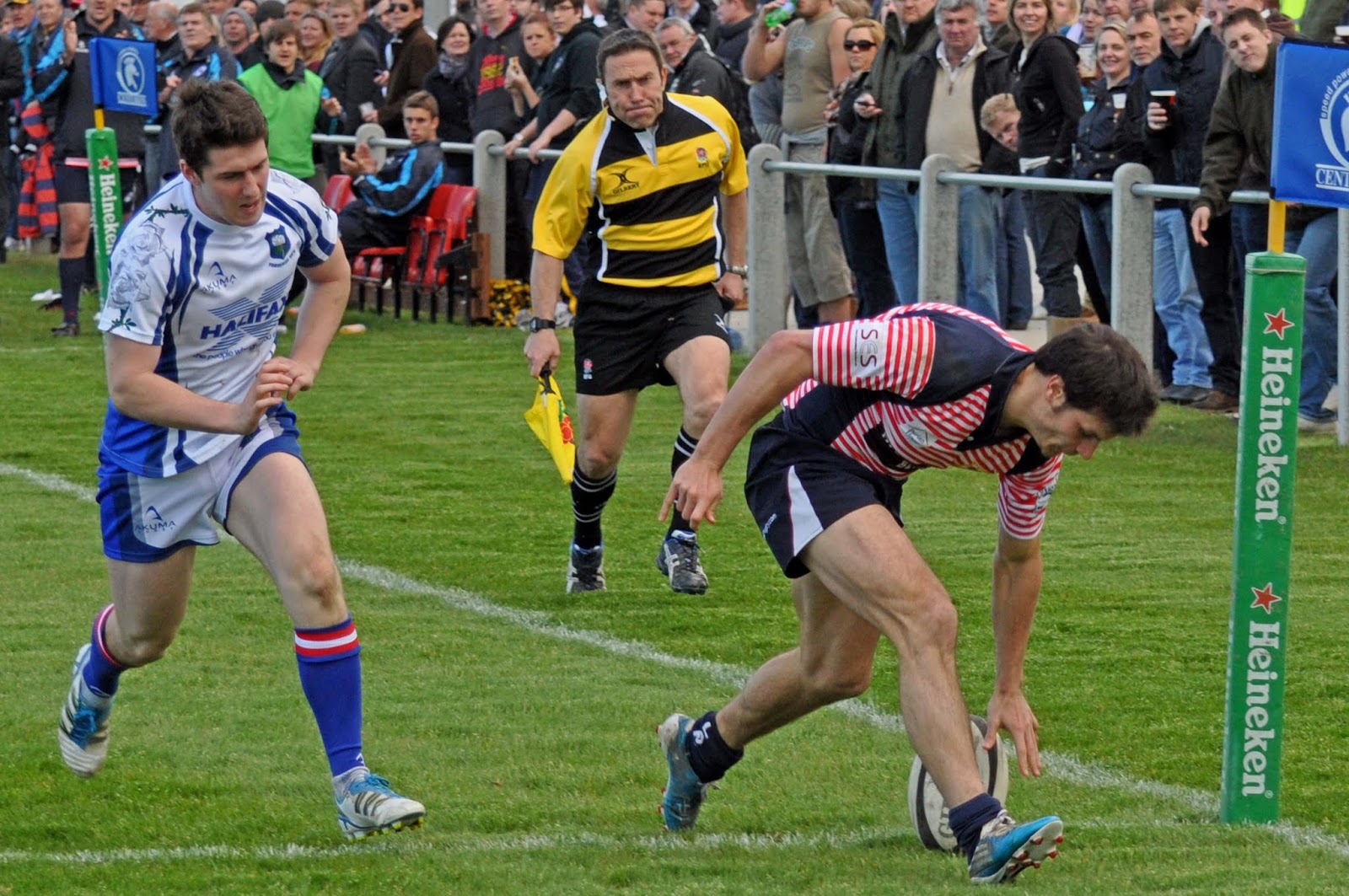
In football, I refer to the "a goal is a goal" principle, where a picture that would otherwise be rejected makes the final collection as it depicts a goal being scored: the equivalent in rugby is "a try is a try". The try was in the original Rules (I am not sure when they changed the name to Laws) of Association Football, as well as the Laws of the Rugby Football Union, and only allowed the team a kick at goal. The points system was adopted by the RFU in 1886, although the idea of an opportunity to try for goal persisted in rugby union in theory until 1979, with the points for the goal replacing those for the try.

Here are a couple of examples of the "a try is a try" principle.
Here, sharp focus is on the far post rather than on Lancashire's Christopher Johnson crossing the line.
Here there is a ruck on the line with the referee obscuring the view, but on the right, Lancashire's Evan Stewart is getting away from the melée to score.

For the photographer, rugby union is noted for its set pieces, such as the scrum. For the last few years, forming the scrum has taken place in 4 distinct stages on the referee's instruction - crouch, touch, pause, engage. This is to reduce the likelihood of shoulder, and most importantly, neck injuries when the two packs come together: before the rule was introduced, packs would come together at what seemed to me an alarming speed from a couple of yards apart.
The scrum here is observing the "touch" command, to ensure that they engage from no more than an arm's length apart. It may be my imagination, I have watched less than half a dozen games this season, and I cannot adduce photographic evidence, but referees seem to be calling the sequence more slowly than previously with the effect that the players are anticipating the commands - "engage" seems sometimes to be a statement of fact rather than an instruction.

I also tried a new vantage point for rugby: I remained at the end that Lancashire were attacking for the second half. As the game attracted a good crowd, the motivation was mainly gaining elbow room. The action seemed quite distant, looking across the in goal area.

However, there was a better view of the players running directly towards me ...
... tackling the opposition running in the opposite direction ...
... and it is easier to capture a try without other players or the match officials obscuring the view.
Oliver Brennand scores one of his four tries
The rest of the pictures from the game can be seen here.

Thursday, 10 May 2012

Our noble Duke

Wikipedia tells us that as late as the second half of the 20th century, it was possible to hear the second line of the National Anthem sung in Lancaster as "Long live our noble Duke", in recognition of the monarch's title as Duke of Lancaster. It is also sung thus at the Queen's Chapel of the Savoy, the remaining part of John of Gaunt's Savoy Palace. Strangely, my mother also taught me this version when I was a child. Our nearest town, East Grinstead, around which our family had lived for over 120 years, was once owned by the Duchy of Lancaster, so there must have been a local tradition, dating back to my great grandparents' time, and long since gone.

I was unable to test any of this when I visited Lancaster for Lancashire's first game in their campaign to retain the County Championship. The top tier of the competition, for the Bill Beaumont Cup is organised on a league format, with 2 divisions of 4 teams each, with the winners playing for the Cup at Twickenham. The games in the league stage are held at clubs around the participating counties. This fixture, against Northumberland, was played at Vale of Lune.
I enjoy a visit to Lancaster, it is a compact and pleasant place to wander round, with some good entries in the Good Beer Guide for pre and post match refreshment.

Many years ago, the County Championships were s stepping stone for players to an international call up. They have diminished in importance since, although there is a representative England Counties XV. They are still an opportunity to see some good players in action, with some from the Championship, and the bulk from National Leagues 1 and 2. Some players named in the squad, such as the fly half for the last few seasons, Alex Davies, were missing as they were still needed by their clubs, in Alex' case for London Welsh in the Championship playoffs.
Alex Davies in action in last season's competition
The County side teams up for three or four games a year, so, whilst I recognised some faces on the pitch, it was not so easy to put names to them apart from those who have played in the competition for a few seasons, such as Rossendale's Stephen Nutt.
Stephen Nutt
Not seeing rugby union very frequently, I am not as clear as I could be about the rules, especially in the maul.
A maul (I think)
I understand the principle, the player with the ball enlists his team mates to push forward against the opposition who are trying to impede or reverse his progress. Part of the objective is to get the ball out of the melée, so you can pass it to someone who is in a position to run with it. Where I get lost is with a picture like that above: the pushing seems to be going on entirely in front of the man with the ball.

A few years ago, rugby union was criticised by some as a game with the ball being hoofed from one lineout to another and most of points coming from penalty kicks. This has not been my experience, and I was fortunate enough not to see a game I heard about with a score of 63-60 with not a single try. This game was very much one of running and handling, with all but 6 of Lancashire's 42 points, and all of Northumberland's 34 points, coming from tries and conversions.

A conversion or penalty kick provides a good opportunity for the photographer, with plenty of time to focus, as the kicker usually needs a carefully practised routine to ensure he strikes the ball in the right way to get it on target, more difficult than it sounds with a ball designed for handling.
Christopher Johnson
Ashley Smith
Rugby has been more keen than some other sports to embrace technology to assist the referee, especially radio microphones to allow the officials to communicate without the referee needing to look out for a waving flag as well as watching the players and the ball. Being wired for sound, sometimes they need to be rewired.
The referee receives engineering attention
The rest of the pictures from the game can be seen here.